
Jammu & Kashmir Travel Tourism
Jammu & Kashmir Travel Tourism
Have you ever dreamed of a place where misty mountains kiss the sky, emerald valleys whisper stories of old, and serene lakes mirror the heavens? Welcome to Jammu & Kashmir, popularly crowned as the “Paradise on Earth.”
Whether you are an adventure junkie looking to conquer snowy slopes, a spiritual seeker, or a traveler wanting to unwind in a floating houseboat, this northern crown of India has something magical for everyone. This ultimate guide covers everything you need to know to plan your perfect trip, from how to reach to the best things to do.
1. Srinagar: The Heart of the Valley
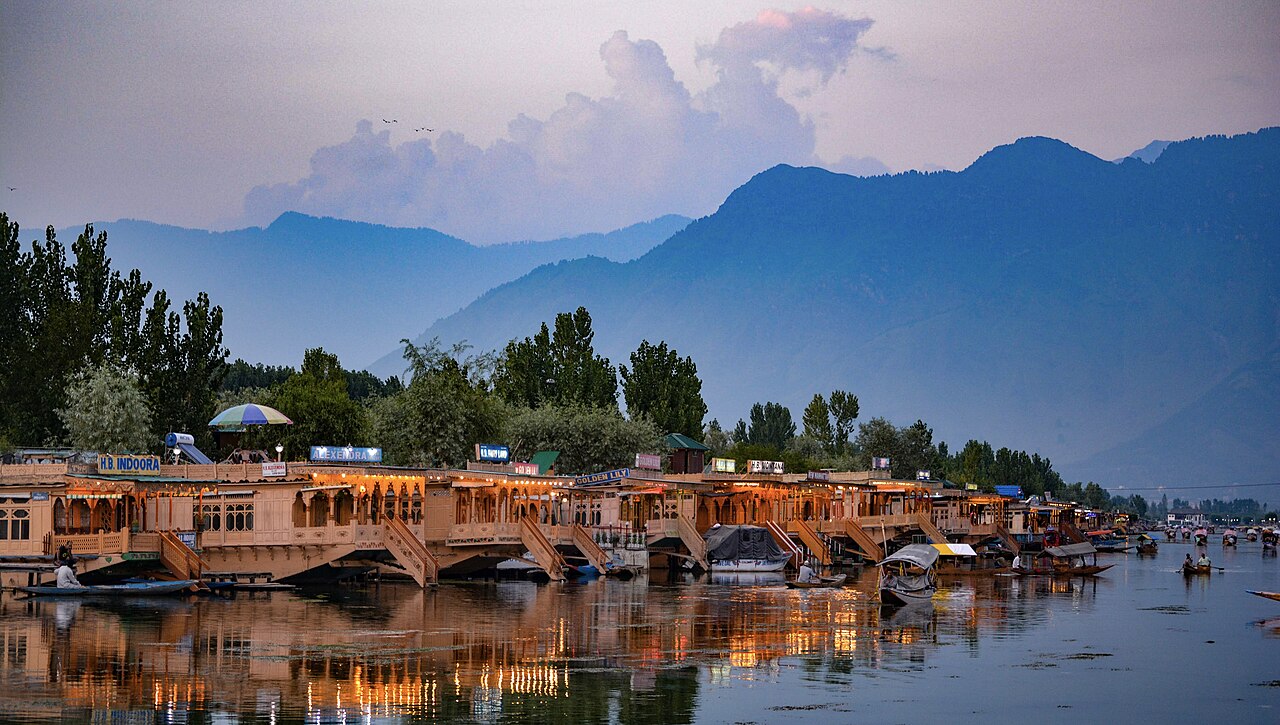
Srinagar is famous for its shimmering lakes, historic Mughal gardens, and buzzing local culture.
If there is a destination that perfectly captures the poetry of nature, it is Srinagar. As the summer capital of Jammu and Kashmir, Srinagar is a dreamy landscape defined by majestic snow-clad peaks, mirror-like alpine lakes, historic architecture, and the gentle rhythm of floating shikaras.
Whether you are plotting a romantic honeymoon, a family holiday, or a solo backpacking escape, navigating this historic city requires a solid plan. This ultimate, SEO-friendly Srinagar travel guide provides everything you need to know: how to reach, top things to do, where to stay, and essential tips for your journey.
- What to do: Take a romantic Shikara ride on Dal Lake during sunset, explore the terraced beauties of Shalimar and Nishat Bagh, and shop for authentic Kashmiri saffron and hand-woven carpets at the local bazaars.
🌤️ Best Time to Visit Srinagar
Srinagar is a true four-season destination, with each period completely altering its visual landscape.
- Spring (March to May): The valley awakens as millions of flowers bloom. This is the exclusive time to witness the Indira Gandhi Memorial Tulip Garden (Asia’s largest) in full glory, typically from late March to mid-April. Temperatures sit comfortably between $10^\circ\text{C}$ and $22^\circ\text{C}$.
- Summer (June to August): With temperatures ranging from $15^\circ\text{C}$ to $30^\circ\text{C}$, summer offers an escape from the scorching plains of mainland India. The meadows are incredibly lush, making it peak tourism season.
- Autumn (September to November): Photographers flock to Srinagar in autumn. The iconic Chinar trees transform into fiery hues of orange, gold, and brass. The weather turns crisp and cool.
- Winter (December to February): The city experiences freezing temperatures ($0^\circ\text{C}$ to $-5^\circ\text{C}$) and heavy snowfall. While the lakes experience partial freezing, nearby ski slopes like Gulmarg turn into prime winter sports havens.
✈️ How to Reach Srinagar
Srinagar is highly accessible via multiple modes of transport, seamlessly connecting it to the rest of India.
By Air
The fastest and most convenient method is flying into the Sheikh ul-Alam International Airport (SXR) in Srinagar. It handles regular direct flights from major hubs like Delhi, Mumbai, Chandigarh, and Bangalore. The airport is located roughly $12\text{ km}$ from the city center (Lal Chowk), accessible via pre-paid airport taxis.
By Train
Srinagar does not yet have a direct, uninterrupted interstate rail link. The nearest major railway station is Jammu Tawi (JAT), located $246\text{ km}$ away. From Jammu, travelers can take a shared or private cab via the national highway, or catch the local connecting train network that currently runs between Banihal and Srinagar (Nowgam Station).
By Road
If you love road trips, driving up the NH 44 (Jammu-Srinagar Highway) is spectacular. The route carves through mountains and passes through the famous Chenani-Nashri and Jawahar tunnels. State-run JKSRTC buses and private luxury coaches operate daily from Jammu and New Delhi.
📍 Top Things to Do in Srinagar
To fully experience the magic of the valley, ensure these core activities and landmarks are on your itinerary:
1. The Iconic Dal Lake Experience
Dal Lake is the lifeblood of Srinagar’s tourism. Spend an evening gliding across its tranquil waters on a traditional wood-carved Shikara ride. To escape the heavy crowds, ask your boatman to steer into the quieter channels of Nigeen Lake or past the historic Char Chinar island. Don’t forget to wake up at dawn to witness the vibrant floating vegetable market.
2. Tour the Timeless Mughal Gardens
Built by the Mughal Emperors during the 17th century, these terraced lawns feature beautiful Persian architecture, cascading water fountains, and ancient Chinar trees.
- Shalimar Bagh: Built by Emperor Jahangir for his wife, Nur Jahan—often called the ‘Garden of Love’.
- Nishat Bagh: The ‘Garden of Bliss’, offering sweeping vistas across Dal Lake against the backdrop of the Zabarwan mountain range.
- Chashme Shahi: A smaller, stunningly terraced garden built around a natural fresh-water mountain spring renowned for its refreshing properties.
3. Climb to Shankaracharya Temple
Perched majestically atop the Gopadri Hill at an altitude of $1,100\text{ ft}$, this ancient stone temple dedicated to Lord Shiva offers the most breathtaking panoramic views of Srinagar city, the Jhelum river, and the vast expanse of Dal Lake below.
4. Walk the Historic Old City (Downtown)
Step away from the lakeside resort zone to experience real Kashmiri life. Wander through the historic alleys to marvel at the wooden architecture of Jamia Masjid and the stunning, intricate paper-mâché ceilings of the Khanqah-e-Moula shrine along the Jhelum banks. Finish your day shopping for authentic saffron and pashmina shawls at Lal Chowk or the Polo View market.
🏨 Where to Stay in Srinagar: Neighborhood Guide
Choosing the right locality can dramatically change your travel experience. Srinagar offers everything from budget backpacker hostels to ultra-luxury heritage stays.
| Neighborhood / Zone | Vibe & Setting | Best For | Top Property Examples |
| Dal Lake / Boulevard Road | Energetic, highly accessible, classic lake views | First-time visitors, families, souvenir shoppers | The Lalit Grand Palace, Hotel Meerz |
| Nigeen Lake | Exceptionally peaceful, exclusive, private | Honeymooners, luxury seekers, slow travelers | Premium Heritage Houseboats |
| Rajbagh & Dalgate | Urban, cozy cafes, commercial hub | Budget travelers, foodies, digital nomads | Zostel Srinagar, Lemon Tree Hotel |
| Zabarwan Foothills | Serene, luxury mountain resorts, high views | Luxury seekers, nature enthusiasts | Taj Dal View, The Orchard Retreat |
🛶 The Houseboat Rule: A trip to Srinagar is incomplete without spending at least one night on a traditional wooden houseboat. Ensure your chosen boat is formally registered with the J&K Tourism Department to guarantee standard amenities and fair pricing.
🍽️ Food & Culinary Highlights
Kashmiri cuisine is a rich, aromatic journey of spices. Do not leave the city without trying:
- The Wazwan: A traditional multi-course royal feast heavily featuring slow-cooked meats, including Rogan Josh, Rista, and Gushtaba.
- Kashmiri Kahwa: A comforting local green tea brewed with real saffron strands, cinnamon sticks, cardamom pods, and crushed almonds.
- Nadru Yakhni: A delicious vegetarian curry made of lotus stems slow-simmered in a rich, spiced yogurt gravy.
💡 Crucial Travel Safety & Practical Tips
🚨 Important SIM Card Notice: Due to regional security regulations, prepaid SIM cards from outside Jammu & Kashmir do not work here. You must carry a postpaid connection (Jio, Airtel, or BSNL work best). Alternatively, you can buy a local tourist prepaid SIM card at the airport by presenting your passport or Aadhar card.
- Pre-book the Gulmarg Gondola: If you intend to take a day-trip from Srinagar to Gulmarg, book your cable car tickets online 2-3 weeks in advance. They regularly sell out ahead of time.
- Carry Physical Cash: While digital UPI payments are common in urban shops, local pony riders, shikara operators, and street food vendors almost exclusively prefer physical cash.
- Dress Respectfully: When entering religious sites like the Hazratbal Shrine, Jamia Masjid, or local temples, ensure your shoulders and knees are fully covered. Carrying a light scarf to cover your head is highly recommended.
Conclusion
Srinagar is far more than just a regular holiday stop; it is an enchanting sensory experience that stays with you long after you leave. Use this guide to structure your days, dive deep into the unique local culture, and let the gentle waters of Kashmir heal your soul.
2. Gulmarg: The Meadow of Flowers & Adventure.
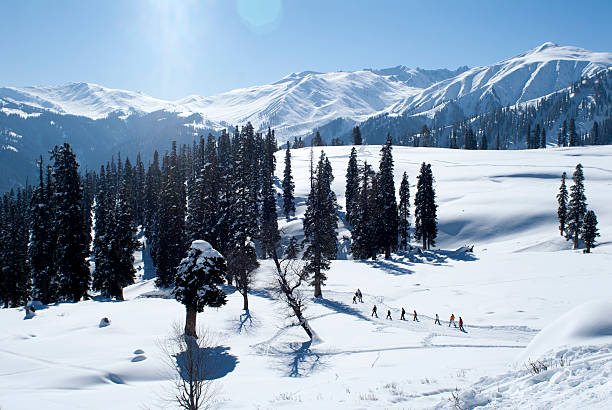
- The Winter Wonderland (December to March): This is the peak season for snow lovers. Temperatures routinely plunge below freezing ($0^\circ\text{C}$ to $-10^\circ\text{C}$), covering the valley under multiple feet of soft, fluffy powder snow. January and February are the absolute prime months for skiing, snowboarding, and heliskiing.
- The Meadow of Flowers (May to September): As the snow melts, Gulmarg transforms into a vibrant green basin carpeted with wild daisies, lupines, and buttercups. Temperatures range from a comfortable $13^\circ\text{C}$ to $25^\circ\text{C}$, making it a spectacular escape from the sweltering heat of mainland India.
✈️ How to Reach Gulmarg
Gulmarg sits roughly $50\text{ km}$ west of Srinagar. Getting here involves a multi-stage but incredibly scenic mountain journey.
Step 1: Reach Srinagar First
- By Air: Flight travel is the most efficient option. Fly into the Sheikh ul-Alam International Airport (SXR) in Srinagar, which connects seamlessly to major hubs like Delhi, Mumbai, and Bangalore.
- By Train: The closest major interstate rail terminal is Jammu Tawi (JAT). From Jammu, you must take a 6-to-7-hour private taxi or state transport bus up to Srinagar.
Step 2: Srinagar to Gulmarg via Tangmarg
From Srinagar, you can hire a private tourist cab directly to Gulmarg (a 2-hour drive).
🚗 Important Winter Note: During heavy winter snowfall (December to February), standard two-wheel-drive vehicles are stopped at Tangmarg (13 km before Gulmarg). You will need to switch to a local 4×4 vehicle equipped with anti-skid snow chains to securely traverse the steep, icy incline up to the resort bowl.
📍 Top Things to Do & Places to Visit in Gulmarg
Unlike massive tourist cities, Gulmarg revolves around a select few, high-impact natural experiences.
1. Ride the Iconic Gulmarg Gondola
This is the centerpiece of any Gulmarg itinerary. As one of the highest operating cable cars in Asia, the Gondola operates in two distinct tiers:
- Phase 1 (Gulmarg to Kongdori): Ascends to $3,050\text{ metres}$. This level is family-friendly, features pine-wood trails, and offers basic snow activities like sledging in early spring.
- Phase 2 (Kongdori to Apharwat Peak): Soars to a dizzying $3,979\text{ metres}$. The summit treats you to sweeping, unobstructed 360-degree views of the heavy Himalayan ranges, stretching all the way to Nanga Parbat on clear days. This is the starting point for expert ski runs.
2. Witness the Frozen Drung Waterfall
Located just a short detour from the Tangmarg-Gulmarg road, this natural waterfall completely freezes solid into giant, jagged icicles during peak winter. Set against a rugged cliffside with a small hydro-plant nearby, it is one of the most viral, photogenic backdrops in the entire region.
3. Explore Alpather Lake
For trekking enthusiasts, this high-altitude alpine lake rests at the base of the Apharwat peaks. It stays completely frozen or choked with floating ice chunks until mid-June. You can reach it via a scenic but demanding 1.5 km hike from the top of Gondola Phase 2, or hire a sturdy pony.
4. Walk the Highest Green Golf Course
Established by the British in 1911, the Gulmarg Golf Course sits proudly at $2,650\text{ metres}$, making it one of the highest 18-hole green golf courses globally. Open from May to October, it offers sprawling walks across perfectly manicured fairways framed by snow-capped mountains.
🏨 Where to Stay: Accommodations & Locations
Finding lodging depends heavily on your budget and whether you want immediate slope access.
| Location | Vibe & Advantage | Best Suited For | Top Property Examples |
| Gulmarg Meadow Center | Ultra-convenient, premium slope views, quick Gondola access. | Luxury travelers, honeymooners, avid skiers. | The Khyber Himalayan Resort, Hotel Highlands Park |
| Outer Circle Road | Quiter, panoramic woodland settings, relaxing atmosphere. | Mid-range travelers, families, nature lovers. | Grand Mumtaz, Alpine Ridge, Hotel Pine Palace |
| Tangmarg (13 km down) | Budget-friendly, warmer climate, avoiding mountain prices. | Backpackers, budget-conscious groups. | Local guesthouses, budget boutique hotels |
Conclusion
Gulmarg successfully bridges the gap between raw alpine adventure and timeless Himalayan serenity. Whether you are slicing through deep powder snow or strolling through knee-high summer wildflowers, it is a destination that delivers memories of a lifetime.
3. Pahalgam: The Valley of Shepherds
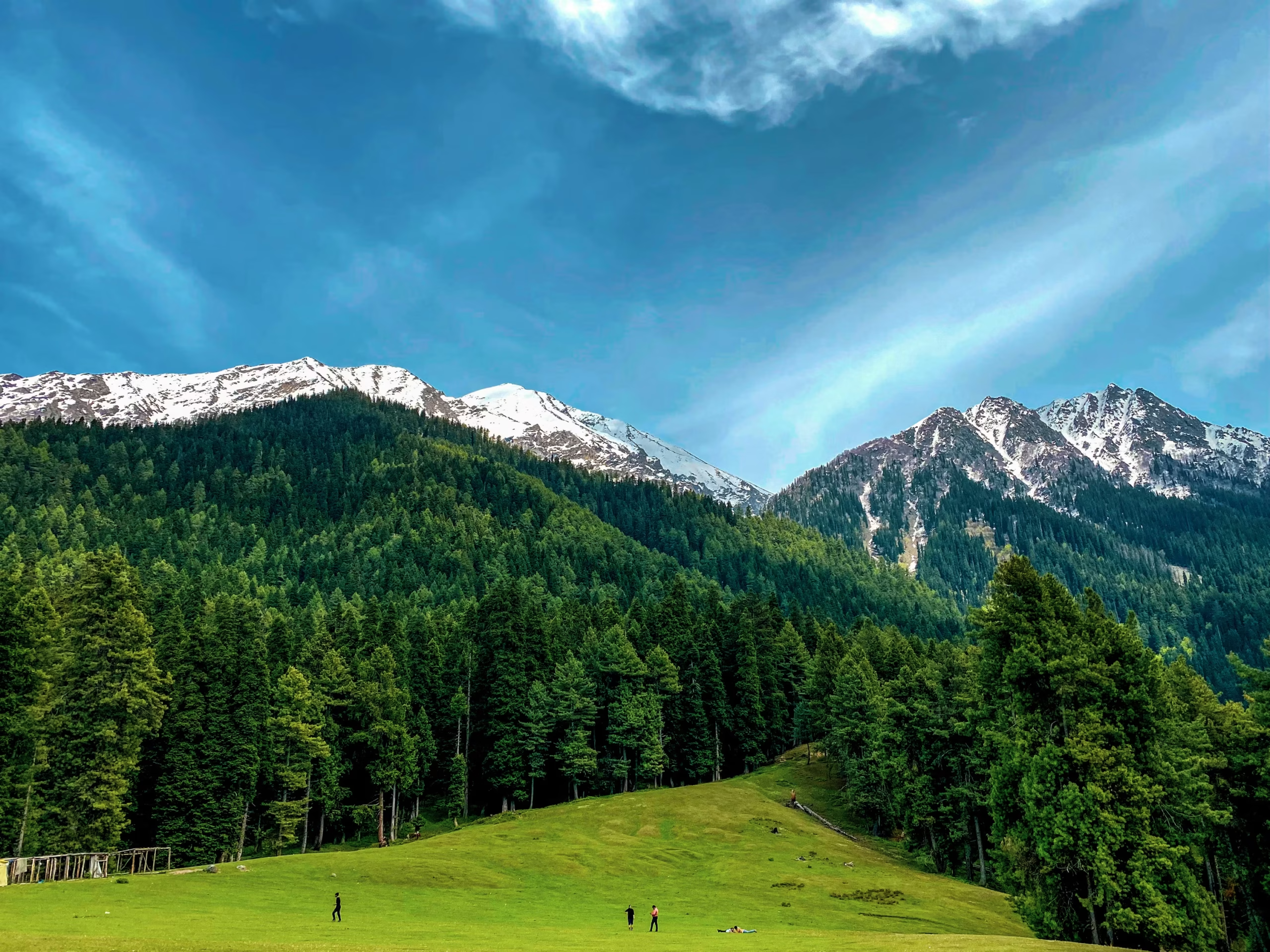
Pahalgam is where raw nature meets ultimate tranquility. The roaring Lidder River cuts right through this breathtaking town.
📍 Top Places to Visit in Pahalgam
Pahalgam is not about rushing through a checklist; it’s about choosing a few stunning locations and soaking in the nature.
- Betaab Valley: Named after the famous Bollywood movie Betaab which was shot here, this valley offers a postcard-perfect view of sprawling green meadows framed by gushing river bends and jagged snow-capped mountain walls.
- Aru Valley: Located about 12 km from Pahalgam, Aru is a peaceful, scenic village known for its expansive, open meadows. It acts as the starting base camp for several high-altitude treks, including the Kolahoi Glacier and Tarsar-Marsar lakes.
- Baisaran Meadow (“Mini Switzerland”): A lush green clearing surrounded by thick pine forests that offer panoramic views of the entire town and mountains. It is highly famous for horseback/pony riding trails and zorbing activities.
- Chandanwari: Situated 16 km away, this is highly significant as the official starting point for the annual Amarnath Yatra pilgrimage. It features a stunning snow bridge and scenic picnic spots.
- Lidder River: The lifeblood of the town. Whether you are walking along its banks at dawn or trying out a thrilling white-water rafting session, the roaring sound of this river shapes the entire atmosphere of Pahalgam.
- Mamaleshwar Temple: A historic stone temple dedicated to Lord Shiva, dating back to the 12th century. It offers a quick, quiet glimpse into the ancient heritage of the valley.
🌤️ Best Time to Visit & Seasonal Changes
Pahalgam changes dramatically depending on when you visit:
- Spring & Summer (March to June): The most popular and peak tourist season. The weather is delightful, ranging from $11^\circ\text{C}$ to $25^\circ\text{C}$. The valleys are in full bloom, making it perfect for sightseeing, river rafting, and walks.
- Monsoon (July to September): The crowd thins out, and the valleys turn an intense, vibrant green. Note: This coincides with the holy Amarnath Yatra pilgrimage, so expect increased security checks and higher accommodation pricing.
- Autumn (October to November): The weather turns crisp, and the foliage takes on beautiful golden and orange hues. It is highly recommended for landscape photographers.
- Winter (December to February): The valley transforms into a quiet winter wonderland blanketed in thick snow. Temperatures drop down below freezing ($0^\circ\text{C}$ to $-10^\circ\text{C}$), which is ideal for snow lovers and sledging.
🥾 Top Activities to Do
- Trekking & Camping: Pahalgam is a trekker’s paradise. Popular routes include short day hikes to Lidderwat or demanding alpine treks to Tulian Lake and the Kolahoi Glacier.
- White Water Rafting: The Aru branch of the Lidder River hosts exhilarating rafting options ranging from beginner to intermediate levels (best enjoyed from May to September).
- Trout Fishing & Angling: The pristine streams of the Lidder River are globally renowned for brown and rainbow trout fishing. Note: You will need to obtain a fishing permit from the J&K Fisheries Department.
- Golfing: Play a round at the high-altitude Pahalgam Golf Course, an 18-hole green course situated 2,400 meters above sea level, surrounded by majestic pines.
✈️ How to Reach Pahalgam
- By Air: The nearest airport is the Sheikh ul-Alam International Airport (SXR) in Srinagar, roughly 90 km away. From the airport, you can hire a private prepaid taxi or take a shared cab to reach Pahalgam in about 2.5 hours.
- By Train: The nearest major interstate rail terminal is Jammu Tawi (JAT), located about 220 km away. Alternatively, you can take a train up to Udhampur or take the local valley train network up to Anantnag station, then take a short road cab to Pahalgam.
- By Road: Well-connected via the national highway routes. If you are traveling from Srinagar, the drive goes through the famous saffron fields of Pampore and beautiful willow-tree plantations.
💡 Practical Tips for First-Timers
🚨 Connectivity Alert: Regular prepaid SIM cards from outside Jammu & Kashmir do not work here due to state security regulations. Ensure you carry a postpaid SIM (Jio and Airtel offer the best coverage in the valley).
💵 Keep Cash Handy: While UPI digital payments work at hotels and main markets, mountain vendors, pony handlers, and local guides almost exclusively accept physical cash.
🗂️ Local Sightseeing Rule: External tourist vehicles are often not allowed to drive inside core sightseeing spots like Aru or Betaab Valley. You will need to hire local registered union taxis or ponies from the main Pahalgam taxi stan
- What to do: Visit the spectacular Betaab Valley (named after the Bollywood movie) and Aru Valley. You can also take a pony ride up to the stunning Baisaran Meadows, affectionately known as “Mini Switzerland.”
4. Katra & Jammu: The Spiritual Hub
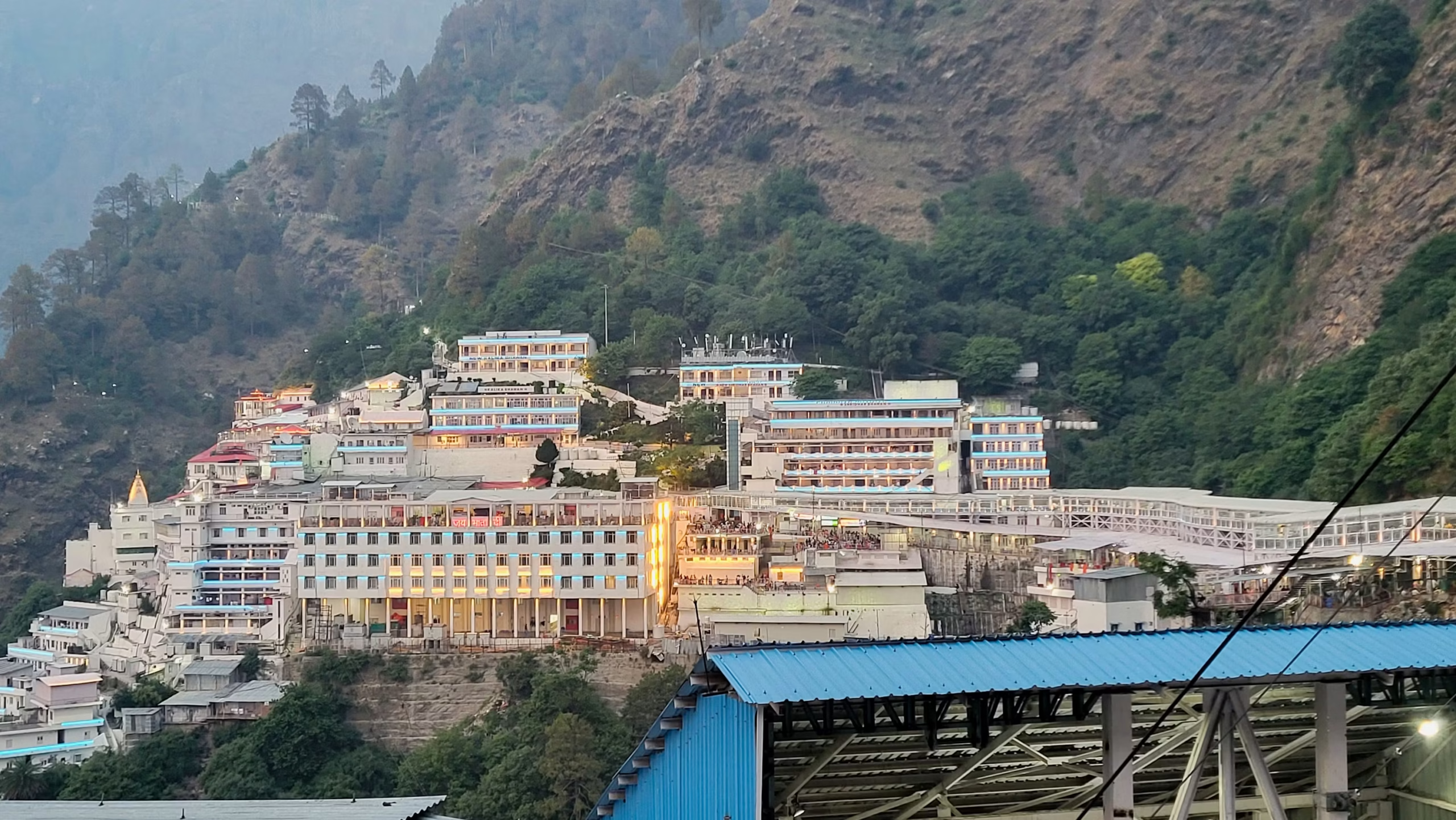
If you want to experience the spiritual energy of the region, the Jammu foothills are calling.
📍
Whether you are seeking holy blessings, looking to explore ancient caves, or taking a scenic day trip, this region offers a diverse itinerary.
- Shri Mata Vaishno Devi Temple (The Bhawan): One of the most revered shrines in India, located at an altitude of 5,200 feet. Devotees undertake a highly spiritual 12-km uphill trek from Katra to catch a glimpse of the holy Pindies inside the ancient cave.
- Ardh Kuwari Cave (Garbh Joon): Located exactly midway on the 12-km trek route, this narrow cave is believed to be where the Goddess meditated for nine months. Crawling through this small cave is considered a spiritually enriching rite of passage.
- Bhairavnath Temple: Perched 2 km higher than the main Bhawan. Legend dictates that the Vaishno Devi pilgrimage is incomplete without visiting this temple. It offers stunning, sweeping views of the entire mountain range and can be reached via a steep walk or a swift 3-minute ropeway ride.
- Baba Dhansar: Located roughly 20 km from Katra, this is a magical, hidden gem. It features a historic temple dedicated to Lord Shiva situated right next to a pristine, gushing waterfall that flows into a crystal-clear turquoise pond.
- Shiv Khori: Situated around 70 km away, this is a spectacular 3-km-long natural cave formation shaped like Lord Shiva’s damroo. It houses a self-manifested 4-foot-tall ice/stone Shiva Lingam with natural milky water continuously dripping over it.
- Jammu City Highlights: Spend a day in Jammu city to explore Bagh-e-Bahu (a beautiful terraced garden built around the ancient Bahu Fort), the massive Raghunath Temple, and the magnificent Amar Mahal Palace Museum built like a French chateau.
🌤️ Best Time to Visit & Seasonal Changes
While the pilgrimage path is open 365 days a year, the experience shifts with the weather:
- Spring & Summer (March to June): The most comfortable time for trekking with family, with temperatures ranging between $15^\circ\text{C}$ and $35^\circ\text{C}$. However, late May and June can get quite hot and humid at the base camp in Katra.
- Monsoon (July to September): The hills turn an incredibly vibrant, lush green, and waterfalls are at their peak. It is budget-friendly as crowds thin out, but keep an eye out for occasional heavy downpours that can temporarily halt helicopter operations.
- Autumn (October to November): Peak Season. The weather turns perfectly cool ($10^\circ\text{C}$ to $25^\circ\text{C}$). This period coincides with the grand Navratri and Diwali celebrations, when the entire town and trail are heavily illuminated. Book your passes weeks in advance!
- Winter (December to February): Ideal for experiencing crisp mountain air and occasional winter snowfall at the higher elevations of the Bhawan. Temperatures hover between $-2^\circ\text{C}$ and $15^\circ\text{C}$, demanding heavy woolen wear.
🥾 Top Activities to Do
- The Holy Trek: The ultimate 12-km trek on a fully paved, well-lit track. You can opt for traditional routes via Banganga or the newer, slightly gentler alternative tracks.
- Pony, Palki & Battery Car Rides: For children, elderly travelers, or anyone with physical restrictions, the Shrine Board offers ample registered pony handlers, palanquins (palkis), and electric battery vehicles (operating between Ardh Kuwari and Bhawan).
- Helicopter Rides: For a quick, time-saving journey, skip the trek entirely by booking a scenic helicopter ride that flies from the Katra heliport straight up to Sanjichhat (just a 2.5-km short walk away from the main shrine).
- Shopping for Souvenirs: Katra’s main markets are a goldmine for buying premium quality Kashmiri dry fruits (walnuts, almonds), pure organic saffron, traditional brass prayer items, and hand-woven blankets.
✈️ How to Reach Katra & Jammu
- By Air: You can fly into Jammu Airport (IXJ), which handles multiple flights from major hubs. Katra is located just 50 km from the airport and is easily reachable via a 1.5-hour drive via taxi or local Volvo buses.
- By Train: Highly convenient. The Shri Mata Vaishno Devi Katra (SVDK) railway station connects Katra directly to major metropolitan cities like New Delhi, Mumbai, and Bangalore via direct express trains (including the high-speed Vande Bharat Express).
- By Road: Smooth, well-developed multi-lane highways connect Jammu and Katra to neighboring states like Punjab and Himachal Pradesh.
💡 Practical Tips for First-Timers
🗂️ Mandatory RFID Yatra Card: You cannot start the trek without a valid Yatra Registration Card. You can register for free online on the official Shrine Board website or collect a physical RFID tracking card at the Katra Railway Station or bus stand counters.
🚫 Gadget Restricting Rule: Mobile phones, cameras, smartwatches, power banks, and leather items are strictly prohibited inside the main Bhawan shrine area. Make sure to deposit them safely at the free, official cloakrooms available at the top before joining the darshan queue.
👟 Footwear Tip: Avoid heavy fancy shoes. Opt for reliable, broken-in running shoes or flat-soled sneakers to handle the continuous uphill incline
- What to do: Embark on the holy pilgrimage trek to the Shri Mata Vaishno Devi Shrine in Katra. In Jammu city, explore the historic Bahu Fort and Raghunath Temple.
🏨 Where to Stay: Accommodations for Every Budget
Jammu & Kashmir offers highly unique stay experiences that you won’t find anywhere else in the world.
| Destination | Luxury Experiences | Mid-Range & Budget Stays | Unique Stays |
| Srinagar | The Lalit Grand Palace | Hotel Green Top, City Center hotels | Traditional Luxury Houseboats on Dal Lake |
| Gulmarg | The Khyber Himalayan Resort | Alpine Ridge, Hotel Pine Palace | Cozy wooden ski-lodges |
| Pahalgam | Welcomhotel by ITC Pine & Peak | Radisson Golf Resort, local homestays | Riverside luxury camps |
| Katra | Katra Marriott Resort & Spa | Lemon Tree Hotel, Fortune Park | Pilgrim-focused dharamshalas |
🍽️ What to Eat: A Culinary Journey
Your trip is incomplete without treating your taste buds to authentic Kashmiri cuisine:
- Wazwan: A grand, multi-course feast featuring traditional meat dishes like Rogan Josh and Rista.
- Kashmiri Dum Aloo: Baby potatoes slow-cooked in a rich, aromatic yogurt-based gravy.
- Kahwa: A soothing local green tea brewed with saffron, cinnamon, cardamom, and crushed almonds—perfect for chilly evenings.
💡 Crucial Travel Tips for First-Timers
📌 Mobile Connectivity Note: Only postpaid SIM cards (Jio, Airtel, and BSNL) work in Jammu & Kashmir due to security regulations. Prepaid SIMs from other states will stop working the moment you enter the region.
- Book Gondola Tickets Early: If you’re heading to Gulmarg, book your Gondola tickets online at least 15–20 days in advance; they sell out fast!
- Acclimatization: Give your body time to adjust to the high altitudes, especially if traveling to higher regions like Sonamarg or Gulmarg phase 2.
- Keep Cash Handy: While UPI is widely accepted in major cities, smaller mountain vendors and pony riders prefer cash.
Final Thoughts
Jammu & Kashmir isn’t just a destination; it’s an emotion. From the warm hospitality of the locals to the timeless beauty of the valleys, a trip here will stay with you forever.
🌤️ Best Time to Visit Jammu & Kashmir
Jammu & Kashmir is a year-round destination, with each season painting the landscape in a completely different palette:
- Spring & Summer (April to June): The absolute peak season. The weather is delightfully pleasant ($15^\circ\text{C}$ to $30^\circ\text{C}$), making it ideal for sightseeing. Witness millions of blooms at the Srinagar Tulip Garden in April or escape the subcontinental heat in lush meadows.
- Monsoon (July to September): Perfect for offbeat travelers and trekkers. The valleys turn an intense, vibrant green, and the crowd thins out.
- Autumn (October to November): The valley transforms into a golden paradise. The Chinar trees turn stunning shades of orange and red—a photographer’s dream.
- Winter (December to March): If you want to experience a true winter wonderland, this is your time. Heavy snowfall turns places like Gulmarg into prime destinations for skiing and snowboarding.
✈️ How to Reach Jammu & Kashmir
Reaching paradise is incredibly smooth, thanks to well-connected air, rail, and road networks.
By Air
The easiest way to get here is by flying into Sheikh ul-Alam International Airport (SXR) in Srinagar. It operates regular direct flights from major Indian cities like Delhi, Mumbai, and Bangalore. For the Jammu region, you can fly into Jammu Airport (IXJ).
By Rail
The nearest major railway station is Jammu Tawi (JAT), which connects seamlessly to the rest of India via express trains. From Jammu, you can hire a private taxi or hop on a state transport bus to reach Srinagar ($250\text{ km}$ away via the scenic highway).
By Road
For road-trip enthusiasts, the NH 44 (Jammu-Srinagar Highway)
Are you ready to plan your trip to paradise? Let us know in the comments below which destination you are adding to your bucket list first!
Leave a Reply